In-house NASSCO-certified crew. HammerHead BlueLight® LED system. No subcontractors. No excavation. The most advanced sewer lining technology in Greater Cleveland.
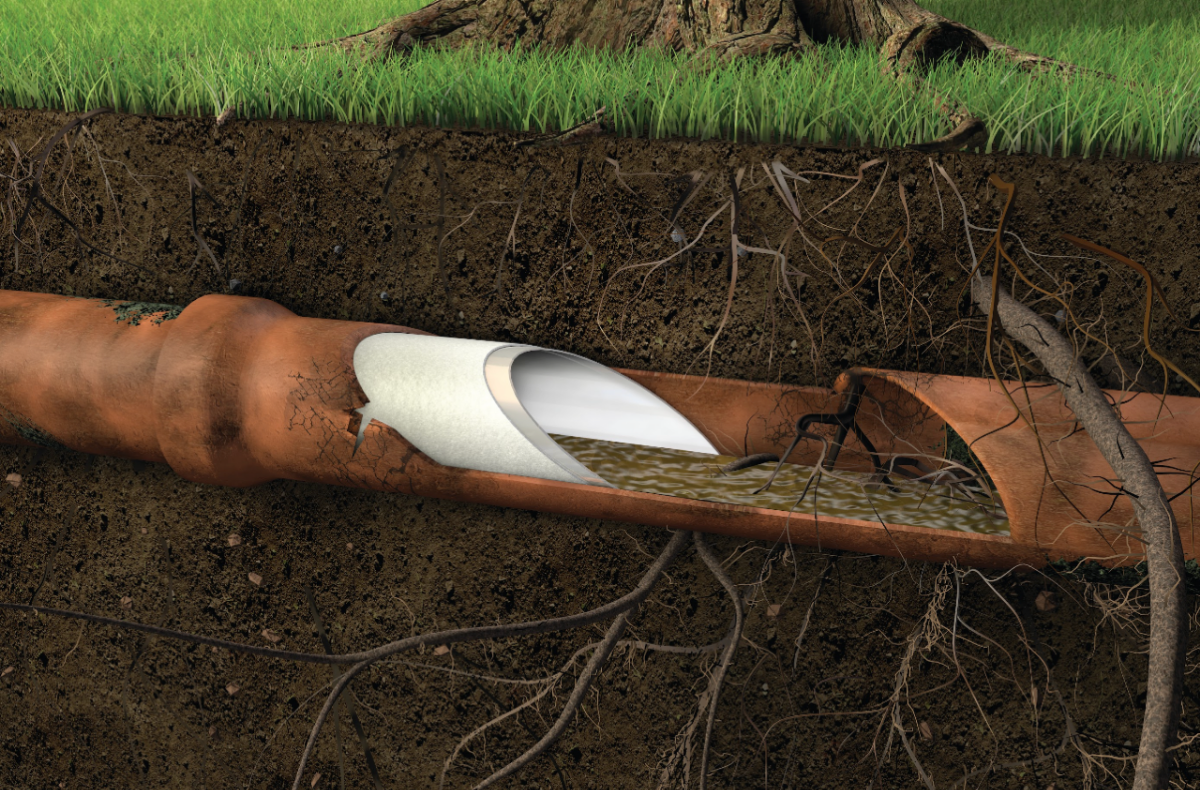
CIPP (Cured-In-Place Pipe) sewer lining repairs your existing pipe from the inside — a resin-saturated liner is inserted, inflated against the pipe wall, and cured with UV blue light to form a jointless, seamless, structurally independent pipe within a pipe. For Northeast Ohio property owners, municipalities, and commercial facilities dealing with cracked, root-infiltrated, offset-joint, or fully deteriorated sewer lines, CIPP lining eliminates excavation costs, saves your landscaping and driveway, and delivers an ASTM-certified 50-year engineered solution — often completed in a single day.
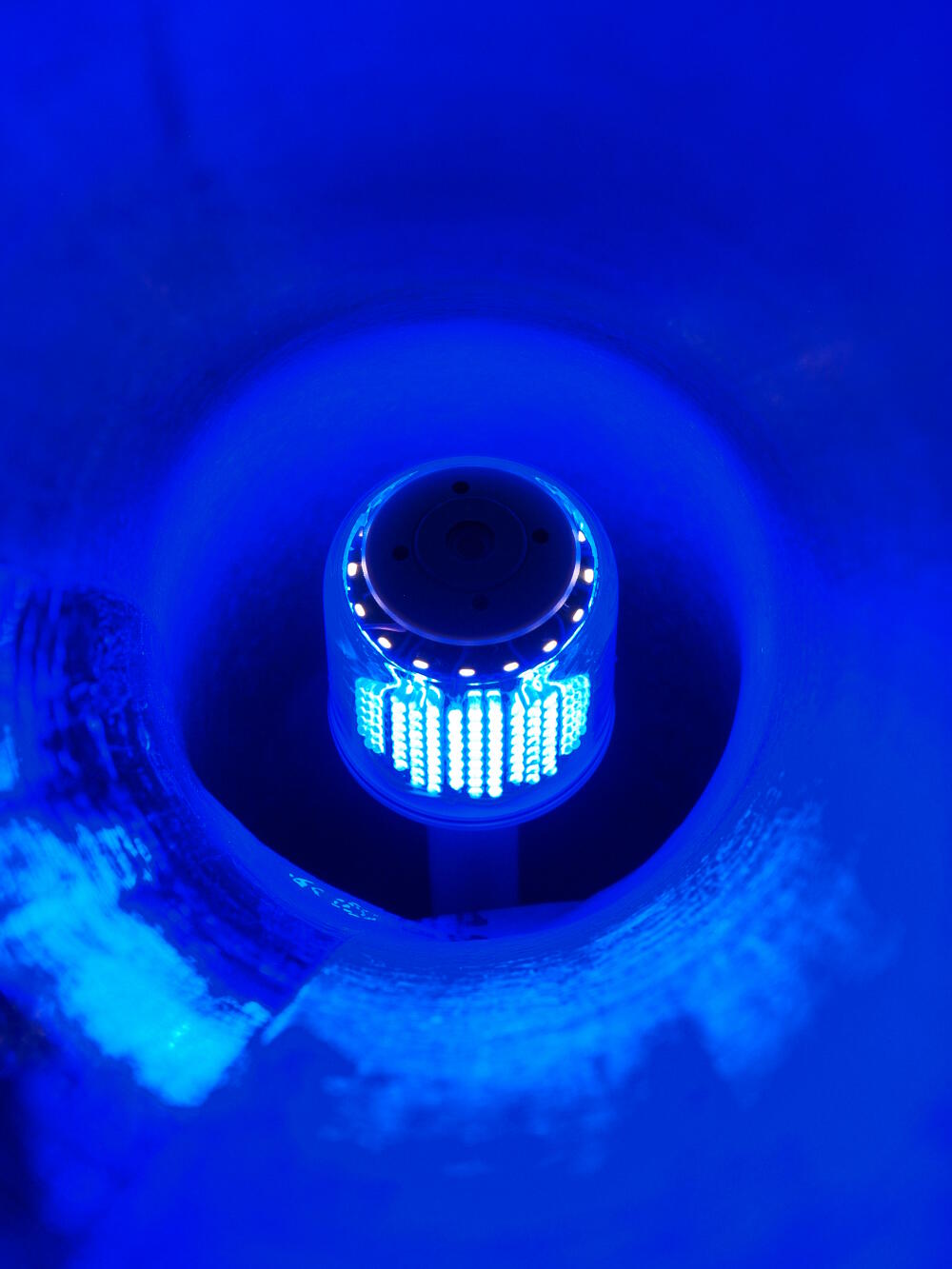
We operate the HammerHead BlueLight LED curing system — the most advanced CIPP technology available in Northeast Ohio. UV/blue-light LED curing outperforms steam-cured and ambient-temperature systems in every measurable category: faster cure times, higher liner strength, lower odor, and consistent results regardless of weather or ground temperature.
Our in-house crew is NASSCO PACP, MACP, and LACP certified on every job. These are not paper certifications — they mean our technicians are qualified to inspect, code, and rehabilitate sewer infrastructure to the national standard used by municipalities and transit authorities across North America. No other contractor in the Greater Cleveland market delivers this combination of technology and in-house certification depth. Nobody comes close.
Every CIPP project follows the same disciplined sequence. No shortcuts. No variations. This is why our liners last 50+ years and our post-installation NASSCO inspections pass every time.
Full CCTV inspection coded to NASSCO PACP standards. We document every defect, root intrusion, offset joint, and structural failure before we touch the pipe.
High-pressure hydro-jetting at 4,000+ PSI removes grease, roots, scale, and debris. The pipe surface must be clean for proper liner adhesion — this step is not optional.
Severe offsets or voids that would compromise liner integrity are addressed first. We fix the pipe, then line it — not the other way around.
The resin-impregnated fiberglass or felt liner is inverted or pulled through the host pipe and inflated against the pipe wall under controlled air pressure.
The HammerHead BlueLight LED train travels through the liner, curing the resin to full structural strength in minutes. Temperature-independent. No odor. No waiting for ambient conditions.
A final NASSCO-coded camera run confirms full liner adhesion, lateral reinstatement, and structural integrity before we call the job done. You receive the inspection footage.
Air pressure inverts the resin-saturated liner through the host pipe end-to-end. Once positioned and pressurized, the BlueLight LED train cures the liner to full structural strength from the inside out. This method handles runs from 4 inches to 24 inches in diameter and pipe lengths from 25 feet to over 500 feet in a single pull. It is the preferred method for mainlines, longer laterals, and pipes with multiple service connections requiring robotic reinstatement.
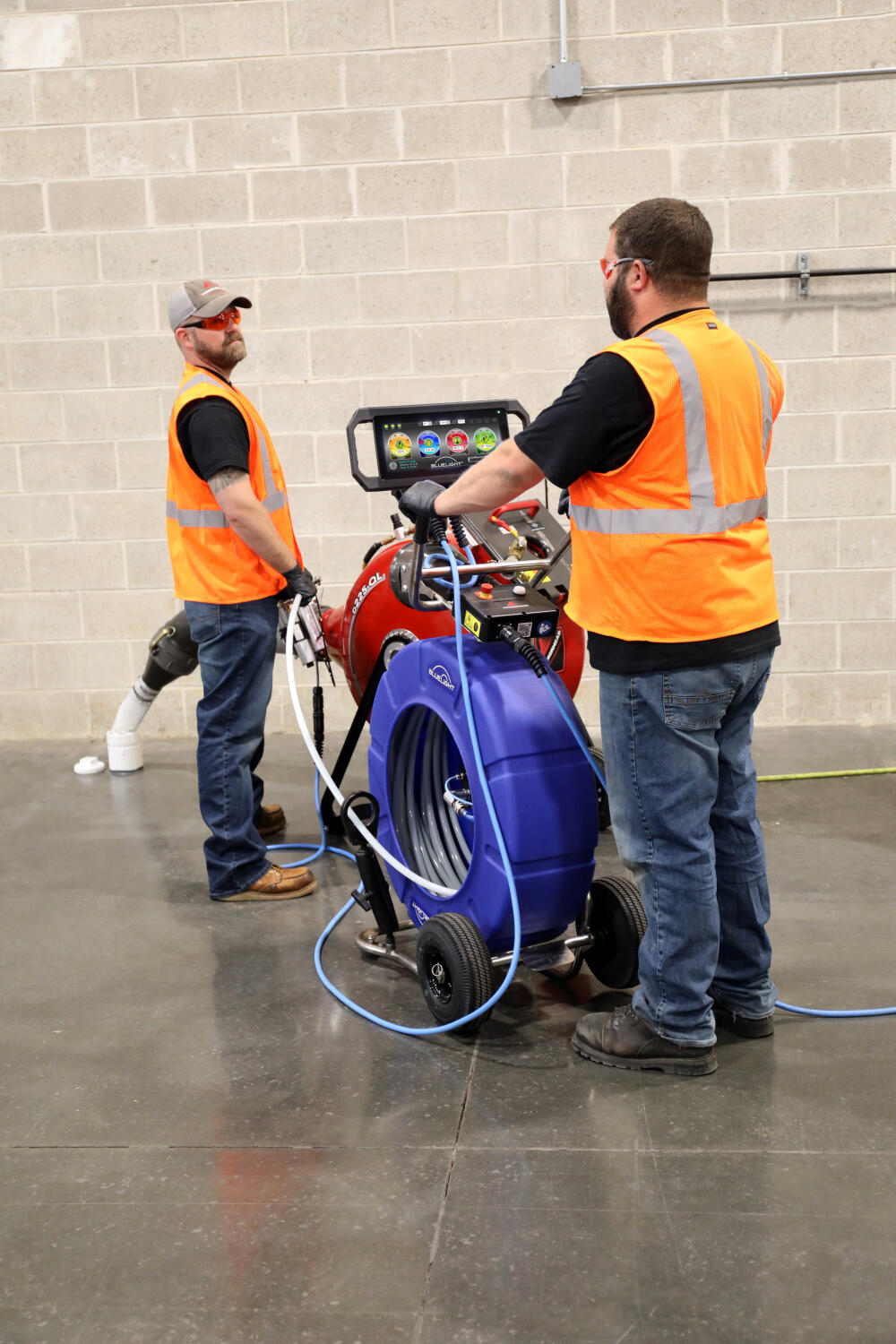
For shorter sections, access-constrained situations, or targeted point repairs, the Pull-in-Place method pulls the liner through from both ends, inflates it, and cures in place. PIP is particularly effective for lateral connections from the mainline to the property line and for short, isolated structural failures.
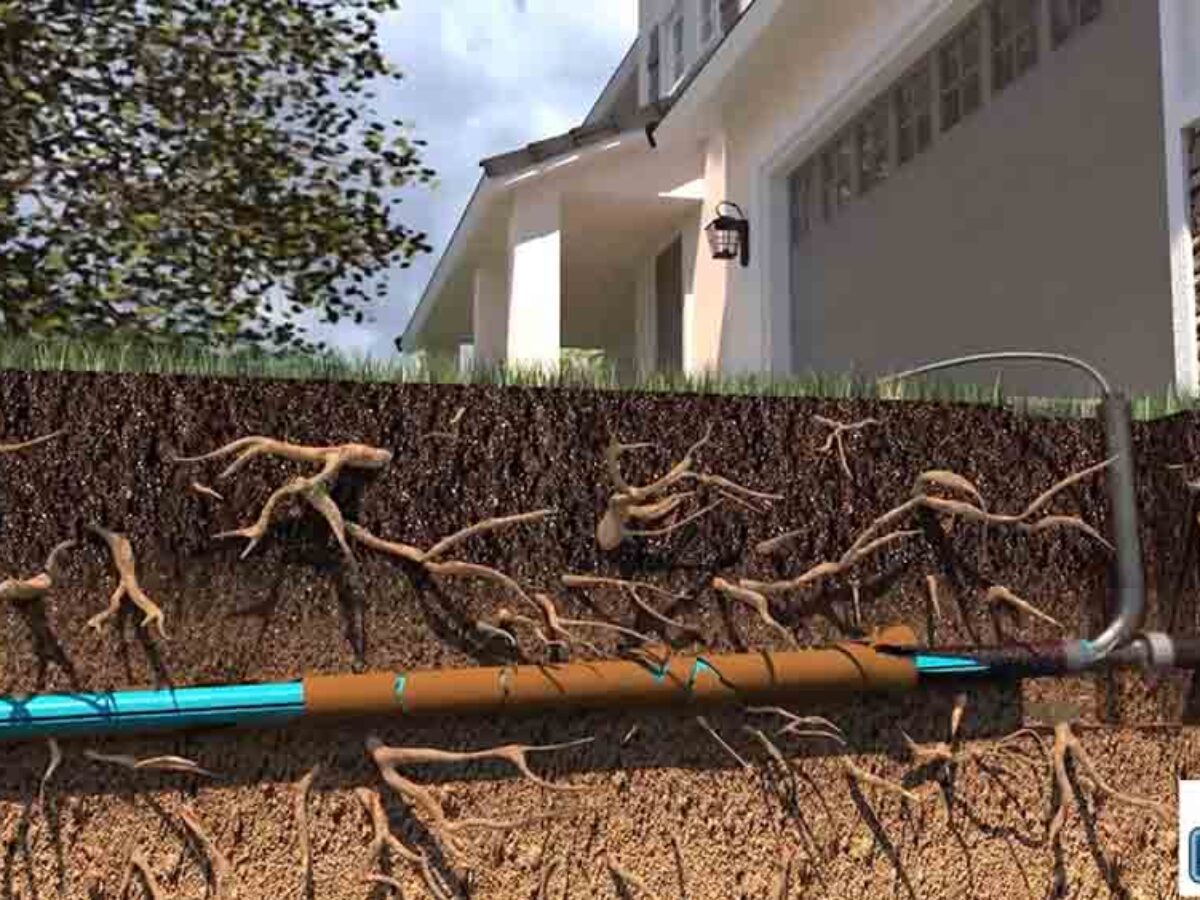
Northeast Ohio's infrastructure spans 100+ years of pipe materials. Our CIPP system handles all of them.
The most common pipe in pre-1970 Cleveland-area homes. Root intrusion, joint separation, and cracking are epidemic. CIPP is the definitive fix.
Cellulose and pitch composite used from the 1940s–1960s. It disintegrates over time and is the most urgent CIPP candidate in older NE Ohio neighborhoods. If you have it, act now.
Older cast iron corrodes from the inside, losing cross-sectional capacity. CIPP restores flow diameter and stops the corrosion cycle with a chemically resistant liner.
Municipal mainlines, storm sewers, and larger-diameter commercial pipes. CIPP lining provides a seamless interior surface and structural reinforcement at a fraction of open-cut cost.
Our CIPP capability is deployed across the full spectrum of public and private infrastructure in Northeast Ohio. If sewer pipe runs beneath it, we can line it.
NASSCO-coded deliverables. NEORSD-compliant inspection and rehabilitation. We hold the certifications, carry the insurance, and produce the documentation your project requires. Municipal RFP experience on record.
Food service, manufacturing, healthcare, and retail. Grease-laden laterals, corroded process drains, and large-diameter industrial mains. We work nights, weekends, and shutdowns to keep your operation running.
Single-family homes, apartment complexes, and condominium associations. We explain every step, protect your property, and deliver the camera footage so you know the job is done right.
Large lateral networks, shared sewer infrastructure, and HOA common-area mains. We produce condition reports and budget-friendly phased rehabilitation plans for multi-building portfolios.
We are the preferred CIPP sub for general contractors and civil engineering firms across NE Ohio. NASSCO deliverables, certified crew, and a project manager on every job. We make your project succeed.
Pre-purchase sewer inspections. Point-of-sale compliance letters. Dye test coordination. We give buyers and sellers the documentation they need — fast.
Homes built before 1970 in Cleveland, Parma, Euclid, Lakewood, Garfield Heights, Shaker Heights, and across Cuyahoga, Lake, Geauga, Lorain, and Summit Counties are running on failing clay and Orangeburg pipe. These materials have exceeded their service lives. Root infiltration is endemic. NEORSD is enforcing point-of-sale inspection requirements across municipalities. The window to repair before collapse is closing.
We know this region's infrastructure better than anyone. We have lined pipe under every type of NE Ohio terrain — from the rock-underlaid Chagrin River valley to the sandy Lake Erie shoreline communities. We know which municipalities require dye tests, which require compliance letters, and which have combined sewer systems where inflow/infiltration is measured and penalized.
When you hire Sewer Cleaning Company for CIPP lining, you hire the region's deepest institutional knowledge, the most advanced technology, and the only fully in-house NASSCO-certified crew operating in Greater Cleveland.
12 questions. Straight answers. No fluff. This is the most complete CIPP resource in Northeast Ohio.
CIPP stands for Cured-In-Place Pipe. A flexible liner saturated with thermosetting resin (typically epoxy, polyester, or vinylester) is inserted into the damaged host pipe using air pressure inversion or pull-in-place methods. Once positioned and inflated against the pipe wall, the liner is cured — either with UV blue light (as we use with the HammerHead BlueLight system), hot water, or steam — and hardens into a structurally independent pipe within the original pipe. The result is a seamless, jointless, corrosion-resistant liner bonded to the interior surface of the host pipe. CIPP requires only one or two small access points and eliminates the need for excavation along the pipe run.
CIPP liners installed to ASTM F1216 and ASTM F2019 standards have a design life of 50 years or more. Field performance data from CIPP installations dating to the 1970s in Europe and the 1980s in North America confirms this lifespan. The liner's resistance to root intrusion, corrosion, abrasion, and flow-induced stress is superior to PVC and comparable to high-density polyethylene (HDPE) in most sewer environments. Our HammerHead BlueLight system produces liners that consistently meet or exceed the ASTM mechanical strength requirements for long-term structural performance.
CIPP lining for a standard residential lateral (4-inch to 6-inch diameter, 50 to 100 feet) in the Cleveland area typically ranges from $3,500 to $8,000 depending on pipe diameter, length, depth of access, and the extent of pre-lining point repairs required. Commercial mainlines (8-inch to 15-inch diameter) in the $10,000 to $40,000+ range depending on footage and site conditions. Compare this to open-cut replacement at $150 to $300 per linear foot, and CIPP is almost always the lower-cost solution when excavation and surface restoration are factored in. Call us for a camera inspection and free estimate — we will show you exactly what your pipe needs.
Full pipe replacement (open-cut) requires excavating a trench the full length of the damaged pipe, removing and disposing of the old pipe, installing new pipe, and restoring all disturbed surfaces — driveways, landscaping, sidewalks, and hardscape. The total cost including surface restoration can be two to four times higher than CIPP lining for equivalent footage. CIPP lining requires only one or two small access pits, causes minimal surface disruption, can be completed in hours rather than days, and delivers equivalent or superior structural performance. CIPP is NOT appropriate for fully collapsed or severely offset pipes where the liner cannot be installed — in those cases, open-cut or pipe bursting may be required. We assess your specific situation and recommend the right solution, not the most expensive one.
The HammerHead BlueLight is a UV/LED light-curing system for CIPP pipe rehabilitation. Unlike traditional steam or hot-water curing, the BlueLight system uses a train of blue-spectrum LED lamps that travel through the resin-saturated liner at a controlled speed, curing the resin to full structural strength in minutes. Benefits over conventional systems include: faster curing (reducing job time and traffic disruption), temperature independence (works equally well in January and July), lower VOC emissions (better for occupied buildings and indoor applications), higher and more consistent mechanical strength, and real-time control of cure speed and lamp intensity. We are the CIPP contractor in Northeast Ohio operating this technology with an in-house, certified crew.
Our standard CIPP equipment handles pipe diameters from 4 inches to 24 inches for laterals and smaller mains. For larger-diameter municipal mainlines (27 inches to 36 inches and beyond), we deploy specialized inversion and light-cure equipment. The technology is not diameter-limited in principle — CIPP has been used on culverts and storm sewers up to 108 inches in diameter. Call us with your pipe specifications and we will confirm the right method and equipment for your project.
CIPP requires a minimum open diameter for the liner to be inserted and inflated. A fully collapsed or crushed pipe with no remaining bore cannot be lined — it must be excavated and replaced, or addressed with pipe bursting. A severely deformed pipe with some remaining opening may be a candidate for CIPP with pre-lining point repair to restore enough bore for liner insertion. Our camera inspection assesses the exact condition of your pipe and determines whether CIPP, pipe bursting, or open-cut is the appropriate solution. We will never sell you a liner job that will not succeed.
Yes, CIPP liner wall thickness reduces the inside diameter of the host pipe. For a standard residential 6-inch clay lateral, liner thickness is typically 6 to 9mm, reducing the inside diameter by 12 to 18mm (approximately 0.5 to 0.75 inches). This minor reduction in diameter is offset by the liner's smoother hydraulic surface — the Manning's roughness coefficient of CIPP liner is significantly lower than clay or concrete pipe, meaning water flows faster through the lined pipe. In practice, post-CIPP flow capacity is equal to or greater than the original pipe despite the reduced diameter.
Yes. After the CIPP liner is cured, service connections (laterals entering the main) are reinstated using a robotic cutting device deployed through the lined pipe. The robotic cutter is guided by CCTV camera and precisely opens the liner at each lateral connection point from the inside — no excavation required. The reinstated connection is smooth-edged and structurally continuous with the liner. This is a critical step in any mainline CIPP project and is included in our standard process and final camera verification.
Yes. CIPP lining is governed by ASTM F1216 (installation standard for pressure-cured systems), ASTM F2019 (UV-cured CIPP), and ASTM F1743, among others. NASSCO's Pipeline Assessment Certification Program (PACP) and Lateral Assessment Certification Program (LACP) define the inspection protocols used before and after lining. Our crew holds NASSCO PACP, MACP (Manhole Assessment Certification Program), and LACP certifications, ensuring every job is documented to the same standard used by municipal sewer utilities and state DOTs. These certifications are not optional for government and commercial work — they are required.
A standard residential lateral (50 to 100 feet of 6-inch pipe) is typically lined in one day, including pre-inspection, cleaning, and post-CCTV verification. The liner cure itself with the BlueLight LED system takes 30 to 60 minutes depending on pipe diameter and run length. Larger commercial or municipal projects may require two to five days for access setup, pre-lining preparation, and lateral reinstatement. We schedule work to minimize disruption — evening and weekend installations are available for commercial accounts.
CIPP lining effectively rehabilitates: longitudinal and circumferential cracks, root intrusion (following mechanical root cutting and hydro-jetting), joint separations and offsets (minor to moderate), corrosion and pitting in cast iron and concrete, tuberculation, and Orangeburg pipe disintegration. CIPP does not replace mechanical strength in pipes with severe structural deformation. Our camera inspection identifies your specific defect profile and we will tell you honestly whether CIPP is the right tool — or whether another method will serve you better.
4,000+ PSI hydro-jetting is the mandatory first step before every CIPP liner we install. Residential, commercial, and municipal.
Learn More →Pre-lining CCTV confirms candidacy. Post-lining inspection verifies the finished liner — included with every CIPP project we complete.
Learn More →Large-diameter main lining requires combination hydro-jet and vacuum recovery. Our fleet handles mains up to 36 inches in diameter.
Learn More →CIPP lining for storm mains and culverts. Trenchless rehabilitation keeps your storm system compliant — no road cuts, no excavation.
Learn More →