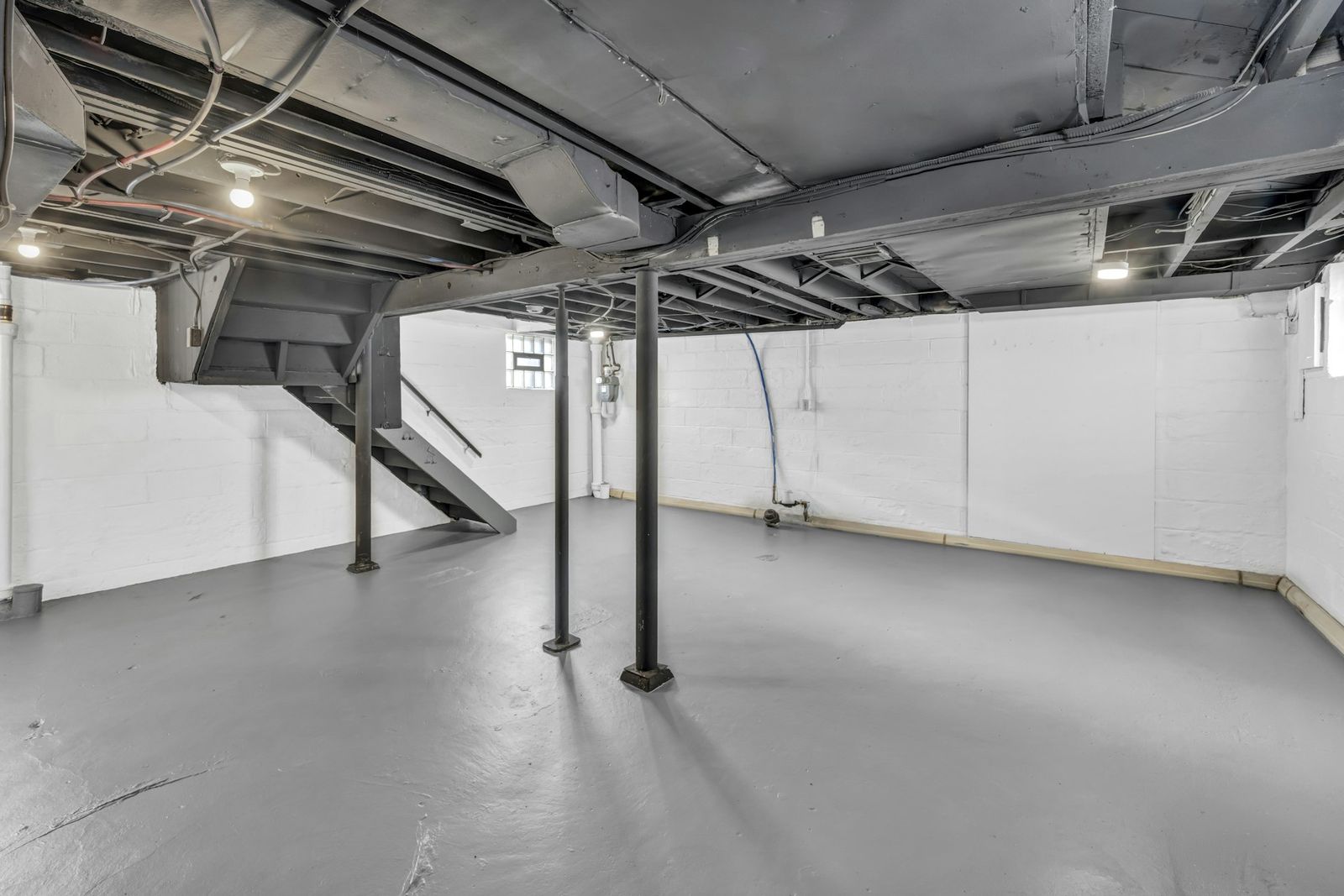
Interior drainage and sump basin solutions to stop basement water infiltration in Cleveland, Ohio.
Interior waterproofing manages water from inside the basement rather than excavating around the outside of the foundation. Instead of stopping water before it reaches the foundation wall, an interior system captures water once it gets inside — through an interior drain line installed along the base of the foundation wall — and routes it to a sump basin, which discharges it away from the house.
It's typically a faster, less disruptive option than exterior excavation, especially when landscaping, patios, driveways, or property lines make digging around the outside of the foundation impractical.
Exterior waterproofing stops water at the source by excavating around the foundation and sealing the outside wall — it's the more comprehensive fix, but also more disruptive and typically more expensive. Interior waterproofing manages water once it's already inside, with less digging and disruption to your property. We offer both and can help you determine which approach fits your situation; see our exterior excavation & waterproofing page for the exterior option.
Contact us for an inspection and we'll walk you through the right fix for your basement.
Exterior waterproofing excavates around the foundation to seal the outside wall and improve drainage before water ever reaches the foundation. Interior waterproofing manages water from inside the basement using drain tile and a sump basin. Exterior work is more comprehensive but more invasive; interior work is faster and less disruptive to your yard and landscaping.
Yes. An interior drain tile system relies on a sump basin to move the collected water out of the basement and away from the foundation. Without a functioning sump basin, the drain tile has nowhere to send the water it collects.
Timelines vary based on the size of the basement and scope of work, but interior drain tile and sump basin installation is generally completed faster than exterior excavation, since there's no digging around the outside of the home involved.
Managing the water intrusion that feeds mold growth and musty odors is a major step toward resolving them. Combined with a vapor barrier and proper ventilation, interior waterproofing helps keep humidity and moisture down, which makes the basement much less hospitable to mold.
They work on the same principle — a perforated pipe that collects water and channels it away. "French drain" is often used for exterior systems installed in a yard or around a foundation, while "interior drain tile" specifically refers to the version installed inside, below the basement floor slab.